

Wood Mackenzie expects energy storage deployment in Latin America to accelerate sharply over the next decade. In its new “Latin America Energy Storage Outlook 2026” report, the consultancy forecasts cumulative capacity to increase from 2.5 GW in 2025 to 34 GW in 2035, representing a 13.6-fold increase in installed capacity over 10 years.
The new forecast represents a substantial revision from the previous edition of the report. In September 2025, Wood Mackenzie projected that the Latin American market would reach 23 GW in 2034, with a compound annual growth rate of 8%. At the time, it had already identified grid constraints, rising renewable energy curtailment, and auctions as the main drivers of energy storage deployment.
“Latin America is no longer a frontier market for energy storage, it is an active market. The project pipeline is growing rapidly, but deployment stalls without comprehensive regulatory frameworks with clear remuneration mechanisms,” said Pamela Morales of Wood Mackenzie.
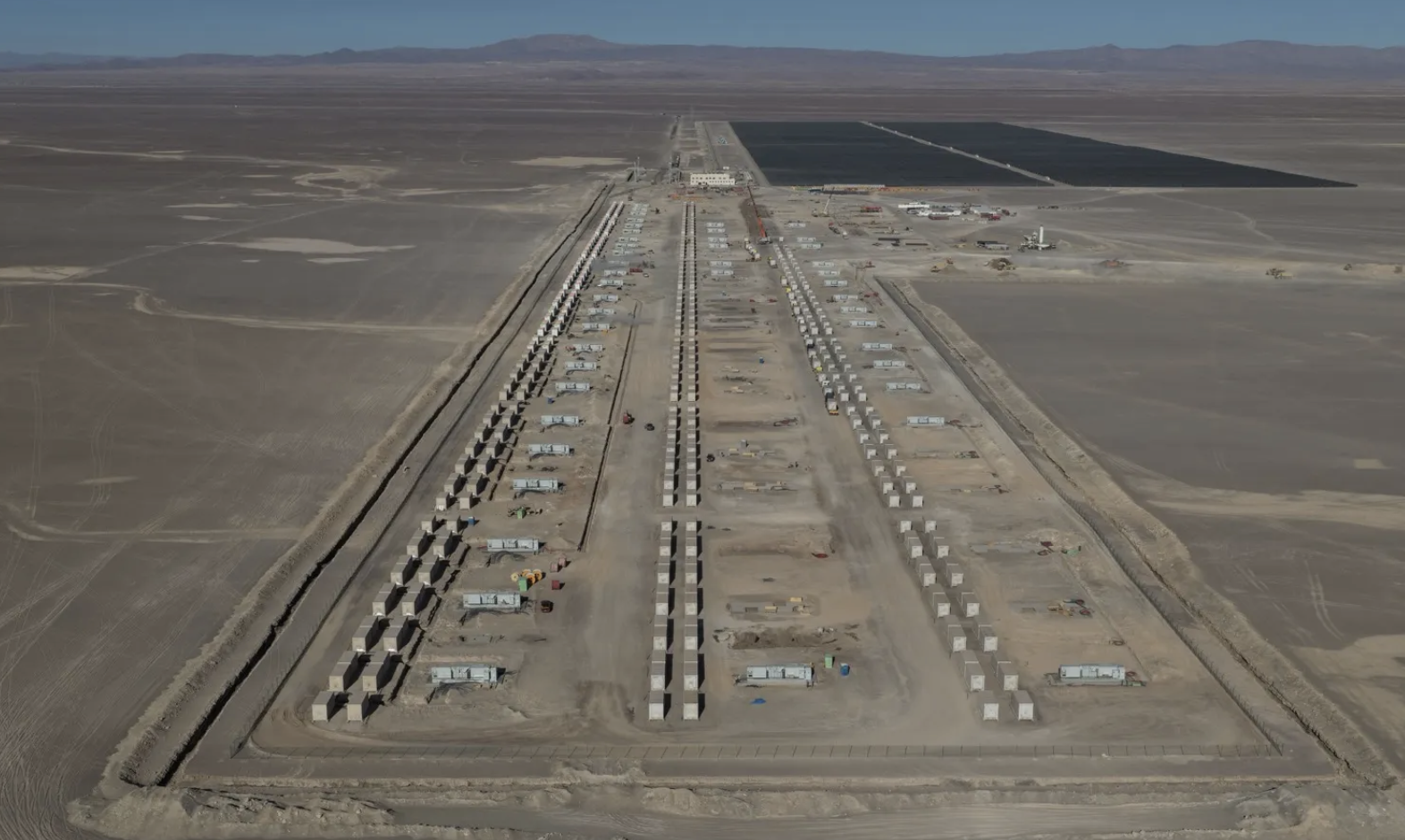
Chile remains the regional leader and has the largest battery energy storage system (BESS) projects currently in operation in Latin America. According to the consultancy, high levels of renewable energy curtailment continue to support investment in longer-duration systems. However, Wood Mackenzie identifies a new risk: price cannibalization in northern Chile as battery capacity increases, which could reduce revenues from energy arbitrage.
Mexico is at an inflection point driven largely by energy policy, according to the analysis. Wood Mackenzie estimates that new mechanisms for strategic projects and joint development schemes with Comisión Federal de Electricidad (CFE), which include storage, could result in more than 3 GW of capacity being awarded through 2030.
Mexico’s call for strategic projects established an indicative target in July of 935 MW of standalone energy storage systems, all with three-hour durations, across Baja California, Baja California Sur, and the North, Northwest, Eastern, Western, and Peninsular regions. The figure is indicative and does not constitute a limit on project submissions. In addition, the Electricity Sector Development Plan includes a storage requirement equivalent to 30% of the capacity of new renewable energy projects, according to Wood Mackenzie’s analysis.
Brazil is also preparing for a change in scale. The country will hold its first two capacity reserve auctions specifically for large-scale battery systems on Dec. 2 and Dec. 4, 2026. The first will be reserved for projects that meet domestic manufacturing requirements, while the second will be open to other systems. Contracts will run for 15 years, with supply beginning Aug. 1, 2028, and facilities will be required to have at least 30 MW of power capacity and four hours of duration.
Wood Mackenzie expects these auctions to accelerate additions in Brazil from 2028, although it warns that financing will remain constrained while sufficiently clear and predictable remuneration mechanisms are absent.
Argentina, meanwhile, has established a standalone energy storage market supported by auctions in little more than a year. The Wood Mackenzie report puts recent awards at around 1.3 GW, while available official data totals 1,413.5 MW. AlmaGBA awarded 713 MW, while AlmaSADI awarded a further 700.5 MW. The projects are primarily intended to ease constraints at critical grid nodes and provide power and reserve services while transmission network upgrades are carried out.
The Dominican Republic is identified in the report as one of the Caribbean markets with a more developed regulatory framework. Regulations require new renewable energy projects of at least 20 MWac to include storage equivalent to at least 50% of their installed capacity, with a minimum duration of four hours. Wood Mackenzie also puts the country’s storage target at 500 MW by 2030.
Despite the expected growth, the consultancy identifies the lack of bankable revenue models as the region’s main obstacle. In many markets, remuneration for ancillary services, energy arbitrage, or capacity has yet to be defined, while financing constraints, permitting delays, and a limited number of buyers able to support long-term contracts add further challenges.
Morales said Latin America needs to strike a balance between mandates and incentives to support market development. She added that countries with bankable remuneration mechanisms will be better placed to convert announced project pipelines into operational assets over the next decade.
Source link