

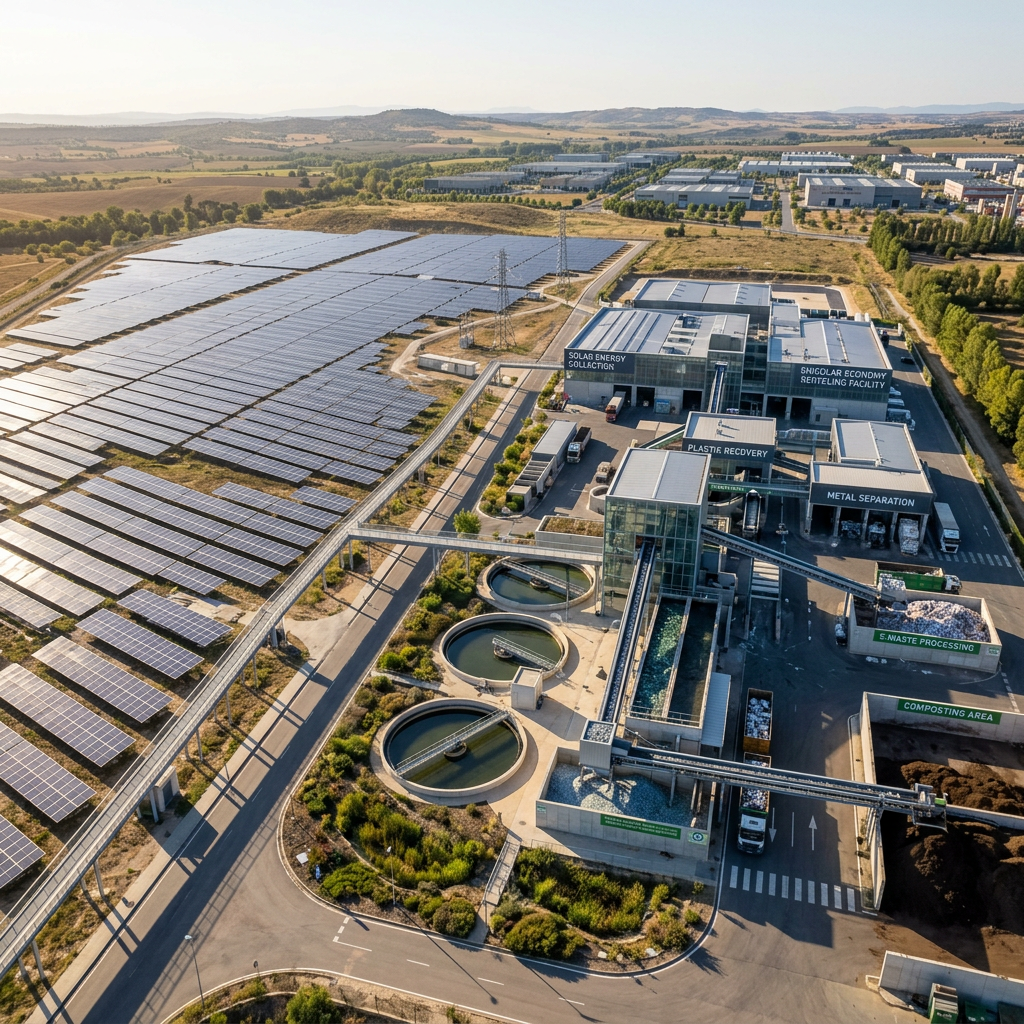
The International Renewable Energy Agency (IRENA) has warned that the rapid growth of solar photovoltaic capacity worldwide will create a major end-of-life waste challenge in the coming decades, making circular economy policies increasingly important for the solar industry.

According to IRENA’s 2026 report, global solar PV capacity reached 2,383 GW by the end of 2025. Solar accounted for about 46% of total installed renewable capacity and 74% of new renewable capacity additions. Under IRENA’s 1.5°C Scenario, global solar PV capacity will need to increase to more than 5 TW by 2030 and over 18 TW by 2050.
However, this growth will result in a large volume of retired solar panels. IRENA projects that the cumulative weight of end-of-life solar PV panels could exceed 200 million tonnes globally by 2050. China is expected to account for 29% of this total, followed by the European Union with 12%, the United States with 11% and India with 9%.
Annual global solar PV waste is expected to exceed 3 million tonnes by 2035, increase to more than 7.8 million tonnes by 2040 and cross 25 million tonnes by 2050. China, India, the European Union and the United States are each expected to handle more than one million tonnes of retired panels annually from 2043.
India is likely to face a particularly sharp increase. The country had 135 GW of installed solar PV capacity at the end of 2025. Its cumulative end-of-life solar panels are expected to exceed half a million tonnes by 2035 and 2.3 million tonnes by 2040. Annual waste could cross one million tonnes by 2043 and reach more than 2.6 million tonnes by 2050. IRENA estimates that around 60 medium-sized solar PV waste treatment facilities may be required between 2035 and 2050.
IRENA said circular economy principles based on “reduce, reuse and recycle” can help address the problem. Reducing material use can limit waste generation, while reuse through repair, refurbishment, testing and certification can extend panel lifetimes. Recycling can recover materials including glass, silicon, aluminium, silver and copper for use in new products.
These recovered materials could also create significant economic value. IRENA estimates their annual market value could exceed $810 million by 2030, reach $6 billion by 2040 and surpass $20 billion by 2050. Recovered materials could eventually supply a significant share of the raw materials needed for new solar PV manufacturing.
The report, however, highlights barriers including unregulated e-waste recycling, inadequate infrastructure, limited financing, lack of standardisation and low technological readiness. IRENA recommends stronger regulatory frameworks, extended producer responsibility, better collection and recycling infrastructure, testing and certification systems for reused panels, financial incentives, digital monitoring systems and greater international cooperation.
IRENA said governments and the solar industry need to prepare now, as more than 80% of solar panels reaching end-of-life by 2050 are expected to enter the waste stream between 2040 and 2050. Early planning could turn the growing waste challenge into an important source of secondary raw materials while reducing environmental impacts.
Source link